
From toys, footwear and furniture to insulated flasks, smart meters, and air coolers - the Central government over the last decade has mandated higher standards for production and imports of such items. Sample this: Till 2014, there were 14 Quality Control Orders (QCOs) covering 106 products. By the latest count, there are 156 QCOs on 672 products.

Without making big-ticket changes in the economic ministries, Prime Minister Manmohan Singh on Tuesday shifted Law Minister M Veerappa Moily to the ministry of corporate affairs and inducted young Milind Deora in his council of ministers.
Even as record foreign fund flows lifted the rupee to 39.43 against the US dollar today, the highest since 1999, the commerce ministry has started telling exporters to prepare for the rupee rising even further to 38 against the US dollar by December. The strong rupee is already hurting India's exporters, with companies cutting jobs and scaling back expansion. A further appreciation may have even worse consequences for sectors like textiles, infotech and automobiles.

The move comes after Union minister M Venkaiah Naidu on Monday resigned after he was chosen as the National Democratic Alliance's candidate for the vice presidential election.

The total incentive outgo under the ambitious production-linked incentive (PLI) scheme is estimated to be less than Rs. 40,000 crore by the fiscal year 2024-25 (FY25), when it completes the fourth year of implementation, according to the government's internal estimates. This means only a fourth of the allocated Rs 1.97 trillion is expected to be utilised by the end of FY24, indicating that not all the 14 PLI schemes would have taken off fully. While three of the 14 schemes - large-scale electronics manufacturing, bulk drugs, and medical devices - were introduced in 2020, the remaining were launched the following year.
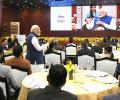
The Centre has appointed senior IAS officers Vumlunmang Vualnam and Neeraj Mittal as new secretaries in the ministry of civil aviation and the department of telecommunications respectively in a major secretary-level bureaucratic reshuffle, a government order stated.
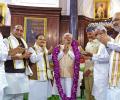
If the concerns over risking political capital are overcome, the long-term gains for the Indian economy will be immense, asserts A K Bhattacharya.

Uttarakhand saw the sharpest decline (of 11 per cent) in the "total persons engaged" in manufacturing in the worst-hit pandemic year of 2020-21 as industrial units shut shop, according to the latest Annual Survey of Industries (ASI) data, released by the Ministry of Statistics and Programme Implementation (MoSPI). This was followed by the decline in the workforce in states such as Jharkhand (8.9 per cent), West Bengal (8.3 per cent), Kerala (8 per cent), and Karnataka (7.8 per cent). The "total persons engaged" in an enterprise is defined as the sum of directly employed workers, supervisory or managerial workers, and the unpaid family members who might be engaged in the enterprise.

The ministry of minority affairs informed the Lok Sabha that in 2022-2023, it had been allotted Rs 5,020.5 crore (Rs 50.20 billion); in the Revised Estimates, it had got Rs 2,612.66 crore (Rs 26.12 billion); and had spent, until the end of March this year, Rs 712.5 crore (Rs 7,12 billion).
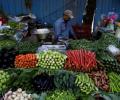
The wholesale price-based inflation declined to 4.95 per cent in December 2022, mainly due to fall in prices of food articles and crude petroleum. The Wholesale Price Index (WPI)-based inflation was 5.85 per cent in November 2022 and 14.27 per cent in December 2021. Inflation in food articles was (-)1.25 per cent, while in fuel and power it was 18.09 per cent during December 2022.
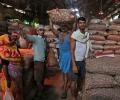
Wholesale inflation rate eased to 34-month low of (-) 0.92 per cent in April on easing prices of food, fuel and manufactured items. The wholesale price index (WPI) based inflation has been on a declining trend for 11 months in a row and entered the negative zone in April. In June 2020 WPI was at (-) 1.81 per cent.

The Centre has taken a major step towards increasing efficiency in decision-making by empowering joint secretaries to report to secretaries directly, officials said on Wednesday.

Centre mulls strategy to ensure powers given to the agencies are not misused.

Retirement fund body EPFO has recorded the highest net member addition of 18.75 lakh in July 2023, according to the payroll data released on Wednesday. The labour ministry in a statement said that the addition of 18.75 lakh during the month is the highest since the first publishing of EPFO payroll data from April 2018 covering the period of September 2017 onwards. A growing trend has continued for the last three months with an increase of around 85,932 net members over the previous month of June 2023.

Hundreds of tailors from a local apparel unit in Kannur have been working tirelessly to get the uniform shirts ready for the Israel police force for the past eight years.
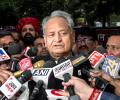
"I sometimes think of leaving it, but the chief minister's post doesn't leave me," Ashok Gehlot famously said earlier this year, in part as a signal to the Congress top brass not to pick someone else for the job if the party wins the assembly polls.
Senior bureaucrat Pradip Kumar Tripathi has been appointed as secretary (coordination) in the Cabinet Secretariat as part of a major bureaucratic reshuffle effected by the Centre on Monday.
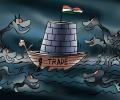
The talks for a free trade agreement (FTA) between India and Canada may have taken a pause but will resume once the political row between the two countries is resolved as the pact has economic benefits for both the nations, trade experts and exporters said on Friday. However, they said that India may not hurry for the trade agreement as 60 per cent of New Delhi's exports are already entering Canada at zero duty. Earlier this month, India and Canada paused the negotiations for the agreement due to political reasons.

The companies on the list are from sectors including trading, finance, packaging, textile, realty, and others. Trading and finance companies account for half-a-dozen companies each.
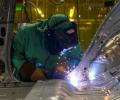
The department for promotion of industry and internal trade (DPIIT) has suggested to the home ministry to allow limited activity in certain sectors such as heavy electricals and telecom equipment with reasonable safeguards. In a letter to Home Secretary Ajay Kumar Bhalla, the department said that these activities are essential to improve the economic situation and provide liquidity in the hands of the people.
Wholesale price inflation remained in the negative territory for the fourth month in a row in July at (-)1.36 per cent, even though prices of food items, especially vegetables, skyrocketed. The inflation, however, has inched up from (-)4.12 per cent recorded in June fuelled by 62.12 per cent rise in vegetable prices. In July last year, wholesale price index (WPI) was 14.07 per cent.

Once the iconic red-brick building of British India Corporation (BICL), which manufactured the popular "Lal-Imli" brand of woollen products, made Cawnpore (now Kanpur) the Manchester of the East. In the 75th year of independence, the government may finally pull the curtains on the century-old, now defunct public sector enterprise. "The Department of Public Enterprises (DPE) has floated a draft cabinet note for closure of British India Corporation (BICL) along with National Textiles Corporation (NTC). "The Cabinet may soon tak
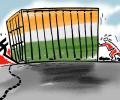
India's exports contracted by 22 per cent, the steepest decline in the last three years, to $32.97 billion in June on account of global demand slowdown, especially in the Western markets like the US and Europe. According to the data of the commerce ministry, the trade deficit in June stood at $20.3 billion against $22.07 billion in the same month last year due to a fall in exports and imports. The inbound shipments during the month under review declined by a steep 17.48 per cent to $53.10 billion.
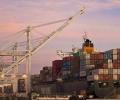
Exports declined for the fourth-consecutive month by 10.3 per cent year-on-year to $34.98 billion in May, while the trade deficit widened to a five-month high of $22.12 billion. According to the data released by the commerce ministry on Thursday, key export sectors recording negative growth include petroleum products, gems and jewellery, engineering goods, ready-made garments of all textiles and chemicals. Imports also declined 6.6 per cent, six-month in a row, to $57.1 billion against $61.13 billion in the same month last year, the data showed.
India's exports recorded a flat growth of 0.59 per cent to $31.99 billion in November, even as trade deficit widened to $23.89 billion during the month, according to the data released by the government on Thursday. Exports stood at $31.8 billion in November last year. Imports rose by 5.37 per cent to $55.88 billion in November as compared to $53.03 billion in the corresponding month a year ago, the data showed. During April-November 2022, exports rose by 11 per cent to $295.26 billion as against $265.77 billion in the same month last year.

India and Australia would now implement the free trade agreement on a mutually agreed date as the Australian Parliament on Tuesday approved the pact between the two countries. "BREAKING: Our Free Trade Agreement with India has passed through parliament," Australian Prime Minister Anthony Albanese said in a tweet. The India-Australia Economic Cooperation and Trade Agreement (AI-ECTA) needed ratification by the Australian parliament before its implementation.
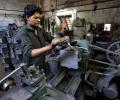
The wholesale price-based inflation eased for the eighth consecutive month to 4.73 per cent in January on easing prices of manufactured items, fuel and power. The wholesale price-index (WPI) based inflation rate was 4.95 per cent in December 2022 and 13.68 per cent in January 2022. Inflation in food articles, however, rose to 2.38 per cent in January, from (-) 1.25 per cent in December, 2022.
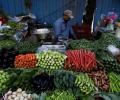
Wholesale price-based inflation rate fell to a 3-year low of (-) 3.48 per cent in May on easing prices of food, fuel and manufactured items, strengthening the case for continuing with the pause in rate hike in the coming months of the current fiscal. This is the second straight month when WPI has been in the negative zone mainly on account of a higher base and falling prices of fuel and manufactured goods. Food prices also eased during May. In May, 2022 WPI inflation was at 16.63 per cent. Last month, it was (-) 0.92 per cent.

"I believe in all of them. I believe in the pain and trauma behind every single complainant," Maneka Gandhi said.

A combination of externalities such as global trade wars and slowing growth, continuing glitches in accessing offsets under the GST regime, which has created a liquidity crunch for smaller exporters, and the growing competitiveness of smaller countries are causing the slowdown.

The wholesale price-based inflation declined to a 19-month low of 8.39 per cent in October, on easing prices of fuel and manufactured items. This is the first time in 19 months that WPI inflation print has come in single digit. Last was in March 2021 at 7.89 per cent. Since April 2021, WPI inflation remained in double digits for 18 months with September print at 10.79 per cent.

Contracting for the third month in a row, India's exports declined by 8.8 per cent to $33.88 billion in February due to slowdown in global demand, even as the trade deficit touched about a year low of $17.43 billion during the month, according to official data released on Wednesday. Imports also declined by 8.21 per cent to $51.31 billion as against $55.9 billion recorded in the corresponding month last year. Cumulatively, however during April-February this fiscal, the country's overall merchandise exports rose by 7.5 per cent to $405.94 billion.

The move is aimed at dealing with any possible emergency situation on account of a spurt in coronavirus cases.
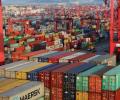
India's exports rose marginally by 1.62 per cent to $33.92 billion, while trade deficit more than doubled to $27.98 billion in August due to increased crude oil imports, commerce ministry data said on Wednesday. The revised data showed that imports rose by 37.28 per cent to $61.9 billion in August this year. The preliminary data released by the ministry on September 3 had shown a 1.15 per cent decline in exports to $33 billion in August.
India's exports entered negative territory after a gap of about two years, declining sharply by 16.65 per cent to $29.78 billion in October, mainly due to global demand slowdown, even as trade deficit widened to $26.91 billion, according to data released by the commerce ministry on Tuesday. Key export sectors, including gems and jewellery, engineering, petroleum products, ready-made garments of all textiles, chemicals, pharma, marine products, and leather, recorded negative growth during October. Imports during the month under review rose by about 6 per cent to $56.69 billion on account of increase in the inbound shipments of crude oil and certain raw materials such as cotton, fertiliser and machinery.

The 68-year-old influential Arab leader will grace the Republic Day celebrations on January 26. Sisi is accompanied by a high-level delegation.

Some leaders of the non-BJP ruled states also alleged that the exclusion was an "insult" by the Centre.
The government is likely to extend fiscal incentives for production of toys, bicycles and leather and footwear in the forthcoming budget as it looks to expand production linked incentive (PLI) scheme to cover more high-employment potential sectors, sources said. The government has already rolled out the scheme with an outlay of about Rs 2 lakh crore for as many as 14 sectors, including automobiles and auto components, white goods, pharma, textiles, food products, high efficiency solar PV modules, advance chemistry cell and speciality steel. The scheme aims to make domestic manufacturing globally competitive and create global champions in manufacturing, and it is yielding solid results, sources said.

India and Bangladesh signed seven Memorandum of understanding (MoUs) on Tuesday in the presence of Prime Minister Narendra Modi and his Bangladeshi counterpart Sheikh Hasina in Delhi. India-Bangladesh delegation-level talks led by PM Modi and Hasina were commenced at the Hyderabad House in New Delhi. "India-Bangladesh delegation level talks led by PM @narendramodi & PM Sheikh Hasina commence. "On the agenda are issues related to connectivity, energy, water resources, trade & investment, border management & security, development partnership and regional & multilateral matters," the official spokesperson of the Ministry of External Affairs Arindam Bagchi tweeted.
 © 2026 Rediff.com - Advertise with us - Disclaimer - Privacy Policy - Sitemap - Feedback - About us - Terms of use - Grievances